
Alessia Russo is a technology investor at Insight Partners, one of the largest global software investment firms with over $90 billion under management. She is part of a small team focused on growth-stage technology investments, designing creative equity structures for high-growth companies at critical inflection points. Before joining Insight, Alessia was an M&A investment banker at Evercore, where she worked on transactions across insurance and financial services. Originally from Turin, Italy, Alessia studied economics at Columbia University and Sciences Po in France, and spent time living in Vancouver before settling in New York. She was recently recognized with the Nova 111 award in Italy for her work at the intersection of technology and investing. That cross-border path has shaped how she approaches her work. “I naturally think about how trends play out differently across markets,” she says. “A lot of the conversation about AI and fintech is very U.S.-centric, and I think there’s a richer, more nuanced story to tell about what’s happening globally.”
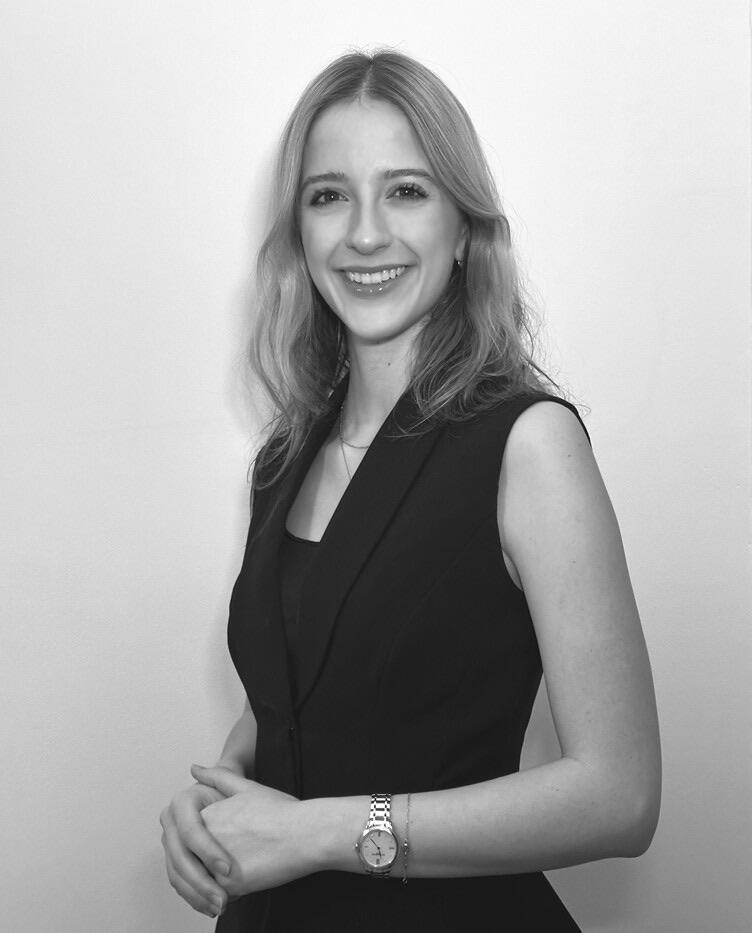
At Insight Partners, Alessia works within a firm that invests across the full lifecycle of software companies, from early-stage through growth, buyout, and IPO. “There’s a real expectation that everyone brings a point of view,” Alessia says. “That’s one of the things I value most. It’s an environment where you can take on meaningful responsibility early and keep learning.”
Much of Alessia’s work sits at the intersection of artificial intelligence and software investing, evaluating how AI is reshaping the competitive dynamics of vertical software companies touching e-commerce, financial services, healthcare, industrials, and more.
One question she keeps returning to is whether the advantages that made a company defensible two years ago still hold up now that AI is commoditizing what used to be proprietary. She’s been thinking of it as evaluating moats relatively: not whether a company is defensible in absolute terms, but whether its advantages hold up against both AI-native entrants and the infrastructure layer expanding underneath them. “So much of the value in fintech historically came from owning proprietary data or being deeply embedded in a customer’s workflow,” she explains. “All of that is shifting, and I think we need new tools and frameworks for evaluating what’s actually defensible right now.”
Alessia has been engaging with founders and the broader VC ecosystem around these questions. She’s also been invited to judge national investment competitions, including the Venture Capital Investment Competition and the Florida Investment Conference, and has spoken at Columbia and NYU and other universities about finance, the VC ecosystem, and how AI is reshaping the industry. “What I kept hearing from students was that my perspective, someone actively investing in these companies every day, brought something different to the room,” she says. “I think that matters. The people shaping the conversation about the future of finance and technology should reflect the people building it. That’s what keeps me showing up.”
Reflecting on her career, Alessia points to the decision to leave investment banking as the most important one she’s made. Alessia was on a strong trajectory at Evercore, but the move put her at the center of two things she cares about most. “Technology and creative deal structuring — that’s what drew me,” she says. “The team I joined runs a focused, high-conviction strategy, which meant I could contribute to how we approach investments rather than inherit someone else’s playbook.” She found herself surrounded by people who genuinely expected her to have a point of view from day one, which pushed her to develop conviction faster than a more hierarchical environment might have allowed.
“I don’t think I’d be doing the work I care most about today if I’d taken the safer path.”
Looking ahead, Alessia is most excited about the fundamental rethink AI is forcing inside financial institutions. “I’m fascinated by how AI is forcing a rethink of how software companies price their products,” she says. “As AI enables smaller teams to accomplish more, the companies that figure out value-based pricing first will have a real edge.” She also finds it interesting that uncertainty seems to be accelerating consolidation rather than slowing it down, and that embedded finance and lower barriers to building are reshaping the startup landscape. “Founders are building MVPs with two or three people that would have required fifteen a few years ago,” she says. “That’s reshaping the entire ecosystem.”
More About Alessia
Where you currently live: New York City
Hometown: Turin, Italy
Favorite hobby: Hot yoga, scuba diving, and backpacking through national parks. When I’m not outdoors I’m usually cooking or hunting down the best new restaurant in whatever city I happen to be in.
What is one piece of advice someone told you that resonated with you that can give to other women in FinTech?
A mentor once told me: “Your job isn’t to know everything. It’s to learn faster than the people around you.” That stuck with me because investing in technology is a job where the landscape changes constantly and you’ll never have perfect information. What matters is building conviction quickly, pressure-testing it honestly, and being willing to update your thinking when the facts change. I’d add to that: don’t wait for permission to have a point of view. As a woman earlier in her career in a field that still skews older and male, it can feel like you need more years or more data before you speak up. But the people who make an impact are the ones who share their thinking early and refine it in the open.
Do you have any productivity hacks? What keeps you motivated? How do you maintain a work/life balance?
My biggest productivity hack is protecting my mornings. I try to keep the first couple of hours unscheduled for deep work before the meetings and emails take over. In terms of balance, I’ve accepted that it looks more like intentional imbalance. There are weeks when work takes everything, and weeks where I make space for friends, sports, and cooking elaborate meals for the people I love. I stay motivated by reminding myself that I chose this career because I find it genuinely interesting, not because anyone expected me to.
Daily Diary
- 6:30 am: Wake up, green tea, scan the news and overnight emails
- 7:00 am: Hot yoga or a run along the Hudson
- 9:00 am: In the office, sync with my team, review the day’s priorities
- 9:30 am to 12:30 pm: Focus work: financial modeling, diligence materials
- 12:30 pm: Lunch, usually at my desk or with a colleague
- 1:00 to 6:00 pm: Meetings: company calls, internal discussions, portfolio check-ins
- Evening: Work event if I have one, otherwise cooking dinner at home
- 9:00 pm: Clear the inbox and prep for following day
- 10:30 pm: Catch up with industry pieces or read whatever book I’m in the middle of
- 11:30 pm: Wind down, lights out